
The other day, while reading about Warli Art, I stumbled upon ‘Saura Art,’ which shares some visual similarities but is distinct in its own right. Today, I’m excited to share what I’ve learned about Saura Art from my online research.

Saura art originates from the Saura tribe, one of the oldest tribal communities in Odisha, India. The roots of this art form can be traced back to ancient times, where it was primarily used as a medium of religious expression. Traditionally, Saura paintings were created on the walls of village homes, especially during religious ceremonies, festivals, and rituals.
These paintings, known as “Ikons” or “Ekons,” were deeply spiritual and often depicted the Saura deities, known as “Idital.” The art was not just decorative but also served as a medium to communicate with the divine, convey prayers, and invoke blessings for the household. Each element in Saura art holds symbolic meaning, reflecting the tribe’s connection with nature, the cosmos, and their ancestral beliefs.
Saura art is rich with symbolism, with each motif and pattern representing different aspects of the Saura tribe’s life, beliefs, and their deep connection with nature and spirituality. The art is often a visual narrative, telling stories that are both spiritual and practical, reflecting the tribe’s worldview.

- Human Figures:
Human figures are central to Saura art and often depict daily activities like farming, hunting, and dancing. These figures are typically stylized, with elongated limbs and simplistic forms, representing the tribe’s communal life and their connection to the land. The figures often appear in a continuous flow, symbolizing the unity and harmony within the community.
- The Sun and Moon:
The sun and moon are common motifs in Saura art, symbolizing the passage of time and the cyclical nature of life. These celestial bodies are often depicted as overseeing the activities of the people, indicating their role in maintaining the balance of nature and life.
- Animals and Birds:
Animals and birds are frequently featured in Saura paintings, representing the tribe’s close relationship with the natural world. Each animal carries a specific symbolic meaning—for instance, the deer often symbolizes grace and agility, while birds can represent freedom or messengers between the earthly and spiritual realms.
- Trees and Plants:
Trees, particularly the banyan tree, are significant in Saura art, symbolizing life, fertility, and the connection between heaven and earth. The tree of life is a common theme, with its roots and branches representing the interconnectedness of all living things.
- Geometric Patterns:
Saura art is known for its use of geometric patterns like circles, triangles, and squares. These shapes are not just decorative but carry deeper meanings—circles often represent continuity and unity, triangles may signify the three realms (earth, sky, and underworld), and squares can denote stability and the earth itself.
- Deities and Spirits:
Deities, particularly the Idital (the main deity of the Saura), are central to many Saura paintings. These figures are usually depicted larger than others, symbolizing their importance and reverence in the tribe. The art often includes depictions of ritualistic scenes where these deities are invoked for protection, blessings, or healing.
- Scenes of Rituals and Festivals:
Rituals and festivals are common themes, reflecting the tribe’s spiritual practices and celebrations. These scenes often show groups of people engaged in dance, music, or religious ceremonies, emphasizing the communal aspect of their culture.


At the heart of Saura art is its reliance on simple geometric shapes—circles, triangles, squares, and lines. These shapes are not randomly chosen; each carries symbolic meaning and is carefully integrated into the composition to convey specific messages. For example:
– Circles often represent continuity, cycles of life, or celestial bodies like the sun and moon.
– Triangles might symbolize stability, with the three points representing concepts like earth, sky, and water, or past, present, and future.
– Squares and Rectangles can signify groundedness and the material world, often used to depict houses or sacred enclosures.
These shapes are arranged in repetitive patterns that create a sense of rhythm and flow within the artwork. This repetition is not just for aesthetic appeal but also reflects the cyclical nature of life, the seasons, and the Saura tribe’s belief in the interconnectedness of all things.

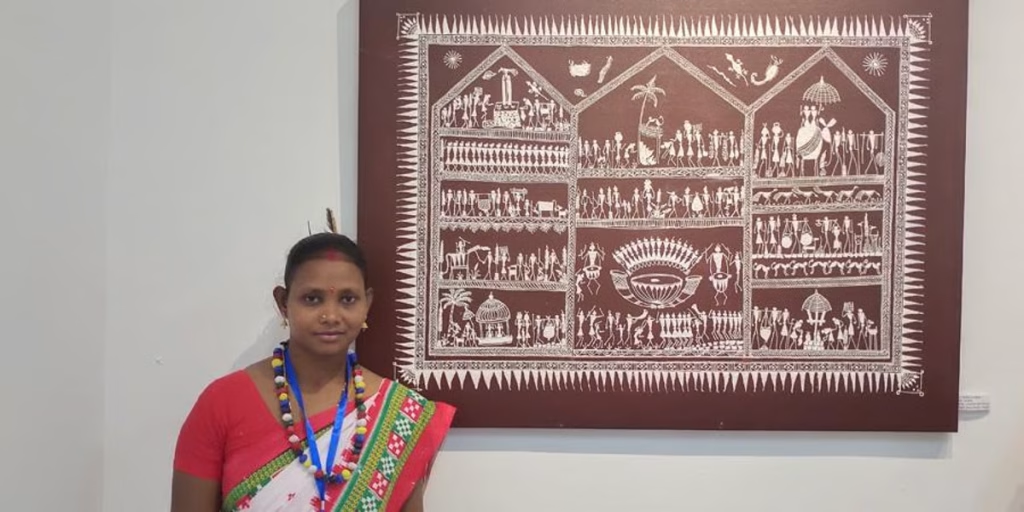

The color palette in Saura art is typically minimalistic, dominated by earthy tones. Traditionally, black and white are the primary colors used, with occasional touches of red, yellow, or green.
– Black and White: These colors are not just visually striking but are also symbolic. Black often represents the night, the unknown, or the spiritual realm, while white can symbolize purity, clarity, and the material world. The stark contrast between black and white adds to the dramatic effect of the art, highlighting the details and patterns.
– Earthy Reds and Yellows: These colors are sometimes added to highlight certain elements, such as the sun, fire, or sacred objects, bringing warmth and vibrancy to the otherwise monochromatic palette.
The restrained use of color enhances the rustic charm of Saura art, grounding it in the natural environment from which it originates. The earthy tones reflect the natural materials traditionally used in creating these artworks, such as natural dyes made from clay, leaves, and other organic substances.
The unique style of Saura art is not just about aesthetics; it’s deeply intertwined with the tribe’s spiritual and cultural identity. Every element, from the simplest line to the most complex pattern, is imbued with meaning. The art serves as a medium for storytelling, religious expression, and the preservation of the tribe’s heritage.
In summary, the unique style of Saura art is a harmonious blend of geometric simplicity, intricate detail, symbolic color use, and narrative flow. It’s an art form that manages to be both visually compelling and deeply meaningful, making it a vital part of India’s rich cultural tapestry.
Saura Art vs. Warli Art: A Comparative Exploration

Saura Art
1. Originates from the Saura tribe of Odisha, one of the oldest tribes in India. Saura art has ancient roots tied to the tribe’s religious practices and rituals. The art was traditionally created on the walls of homes during ceremonies and was deeply connected to the spiritual life of the tribe.
2. Saura art is characterized by the use of simple geometric shapes—circles, triangles, squares, and lines—meticulously arranged to create intricate patterns. Human figures in Saura art are stylized with elongated limbs and are depicted in dynamic poses, often engaged in communal activities. The compositions are dense, with every part of the canvas filled with symbolic elements.
The color palette is typically minimalistic, dominated by black and white with occasional earthy tones like red and yellow. The art is known for its continuous narrative flow, where the entire composition tells a cohesive story.
3. The themes in Saura art revolve around nature, spirituality, and daily life. Common motifs include the sun, moon, trees, animals, and human figures, all interconnected to reflect the tribe’s belief in the unity of the natural world and human existence. The art often has a spiritual undertone, with depictions of rituals, deities, and scenes of worship. Symbolism in Saura art is rich and complex, with each shape and figure holding specific meanings that relate to the tribe’s cultural beliefs and practices.
4. Saura art tends to have a dense, all-over composition where every inch of the surface is filled with intricate patterns and figures. There is often no single focal point; instead, the entire composition is a continuous narrative that guides the viewer’s eye across the entire piece.
5. Saura art has gained recognition in contemporary art circles, particularly for its complex symbolism and narrative style. It is often used in modern home decor, fashion, and commercial art, blending traditional aesthetics with contemporary design elements.

Warli Art
1. Hails from the Warli tribe of Maharashtra, particularly in the areas around the Sahyadri Range. Warli art is also an ancient form of tribal expression, with its origins linked to the daily life and customs of the Warli people. Like Saura art, Warli paintings were traditionally done on the walls of homes, often as part of wedding rituals or to mark important events.
2. Warli art also relies heavily on geometric shapes, particularly circles, triangles, and squares. However, Warli figures are more simplistic, resembling stick figures with basic shapes. The figures are usually arranged in a more open composition, often depicting scenes of dance, hunting, farming, and village life.
Warli art is traditionally created using white pigment on a red or brown background, derived from a mixture of rice paste and water with gum. The art has a more minimalist approach compared to Saura art, with fewer elements in each composition but a strong emphasis on the rhythm and movement of the figures.
3. Warli art focuses more on the social aspects of tribal life. The themes often include scenes of farming, hunting, festivals, and dance, reflecting the everyday activities and celebrations of the Warli people. While Warli art also has a spiritual dimension, it is more focused on the representation of human life and its connection to nature. The symbolism in Warli art is more straightforward, with a clear emphasis on community, harmony, and the relationship between humans and the natural world.
4. Warli art typically employs a more spacious composition, with figures arranged in circular or linear patterns. The central motif, such as a marriage ceremony or a dance circle, often serves as the focal point, with other elements radiating outward or surrounding the main scene. The open space within the composition emphasizes the simplicity and elegance of the design.
5. Warli art has become one of the most recognizable forms of Indian tribal art worldwide. Its minimalistic style and symbolic representation of tribal life have made it popular in various forms of modern art, including murals, textiles, and product designs.
To identify authentic Saura art, look for its distinctive use of simple geometric shapes like circles, triangles, and lines, which are meticulously arranged to form intricate patterns and compositions. Authentic Saura pieces typically have a dense and continuous layout, with little empty space, featuring a rich narrative that spans the entire canvas. Pay attention to the artwork’s spiritual and cultural symbolism, including motifs of nature, animals, and human figures in stylized forms. The color palette usually consists of earthy tones, primarily black and white, with occasional touches of red or yellow, reflecting the traditional materials and methods used by the Saura tribe.

Manas Das is recognized for his contributions to Saura art. Here are some key aspects of his work:
- Contemporary Influences: While rooted in tradition, his work might also incorporate contemporary elements, bridging the gap between traditional Saura art and modern artistic expressions.
- Traditional Saura Techniques: Manas Das adheres to traditional Saura techniques, which involve the use of natural dyes and pigments. His paintings often feature intricate geometric patterns and symbolic motifs that are characteristic of Saura art.
- Themes and Subjects: His work typically depicts themes from Saura mythology, daily life, and rituals. Common subjects include deities, animals, and scenes from traditional Saura folklore. His paintings often reflect the tribal community’s connection with nature and their cultural practices.
- Vibrant Colors and Patterns: Das’s artwork is known for its vibrant use of color and detailed patterns. The paintings are often done on handmade paper or cloth, and the colors are derived from natural sources, maintaining the traditional authenticity of Saura art.
- Cultural Preservation: Through his work, Manas Das plays a significant role in preserving and promoting the Saura art form. His paintings not only continue traditional practices but also introduce the art to a broader audience, contributing to its appreciation and survival.
Saura art is more than just a visual treat; it is a window into the rich cultural tapestry of the Saura tribe and their deep connection with nature. Whether you are an art enthusiast or someone looking to add a touch of tribal elegance to your home, Saura art offers a unique and meaningful way to celebrate India’s artistic heritage. By embracing Saura art, we not only preserve a beautiful tradition but also honor the timeless stories and beliefs of the Saura people.
One thought on “Saura Art: A Glimpse into Tribal Creativity”